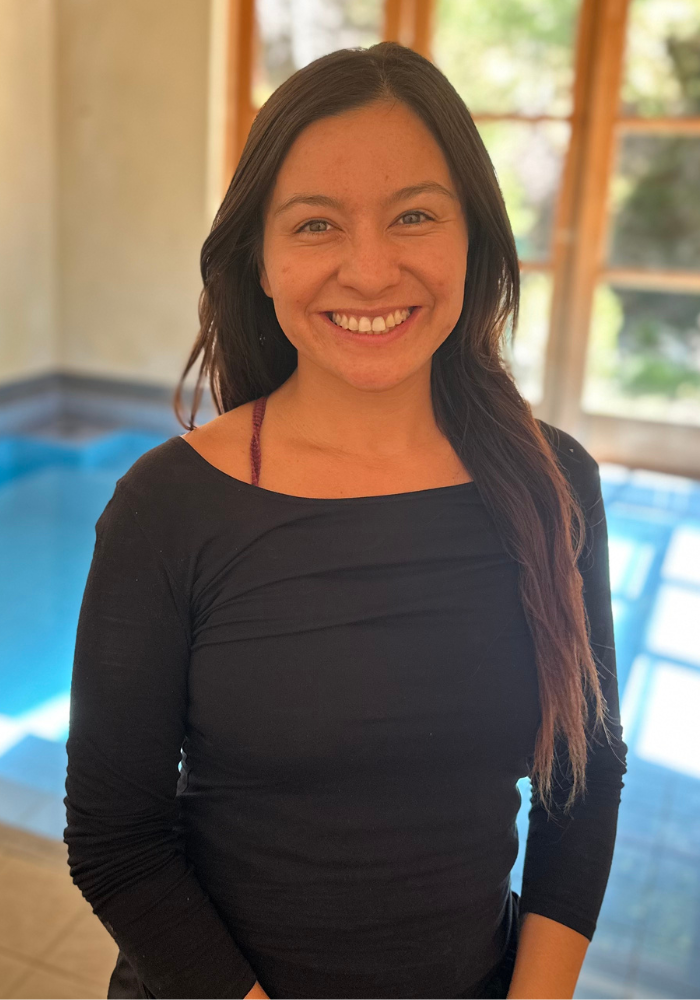
What brought you to Tassajara?
My journey to Tassajara started when a friend recommended the experience. I was looking for a retreat of some sort—something to really jolt me into a better place. My brother passed away a year and a half ago, and it’s just been very heavy. I spent that time in survival mode, and I don’t think I gave myself the space to really mourn.
I wanted to be in a place where I could truly mourn him in a safe environment—with nature, disconnected so I could connect in a spiritual way. Buddhism really spoke to me, especially the ideas around suffering, attachment, and discipline. I was out of routine, undisciplined, and searching for meaning. That’s what brought me to Tassajara.
What has the experience been like for you?
The day-to-day routine and structure helped me tremendously. Knowing what to anticipate, having clear timeframes—it grounded me again. But most importantly, Tassajara has nurtured me in so many dimensions: spiritually, mentally, and physically.
The meditation was very challenging at first. I went from ten minutes once in a while to sitting for long periods every day. It shut off all distractions, and I was suddenly left with a flood of thoughts and feelings. Several days I was overcome with sadness and grief, and I realized how raw it still was. I hadn’t really given myself that silence or space to just be with it.
The practice, the Dharma talks, and the conversations with teachers helped me frame and make sense of what I was feeling. Journaling and reflecting really shifted something for me and helped organize my inner world.
What do you love most about Tassajara?
The beauty of nature here is absolutely breathtaking—the creek, the birds, the vegetation. It becomes the soundtrack of your day. I also love the community. Everyone has their own story and their own reason for being here, and it’s inspiring to be around people who are devoted to working on themselves. Everyone is a teacher here.
What will you take with you?
I’m taking the practice with me—the structure, the discipline, and the value of sitting and slowing down. In the whirlwind of the external and internal world, grounding myself in the breath feels imperative. I’m also taking the lesson of impermanence. While I’m sad my time here is ending, it’s a beautiful reminder to fully be in each moment and carry that awareness into everyday life.
Tassajara can feel intimidating, and it is hard—but not because of the schedule or the work. What’s hard is the inner work. If you allow yourself to be challenged in that way, and trust the process, you’ll thank yourself.